
Understanding Search Intent
- Search intent, often referred to as user intent, is the underlying motivation or goal a user has when conducting an online search. It is crucial for online marketers and affiliate sales, as grasping the nuances of search intent allows marketers to tailor their content and strategies effectively, ensuring they meet the needs of their target audience. By aligning affiliate marketing efforts with the specific intents of users, marketers can increase engagement, drive traffic, and ultimately enhance conversion rates.
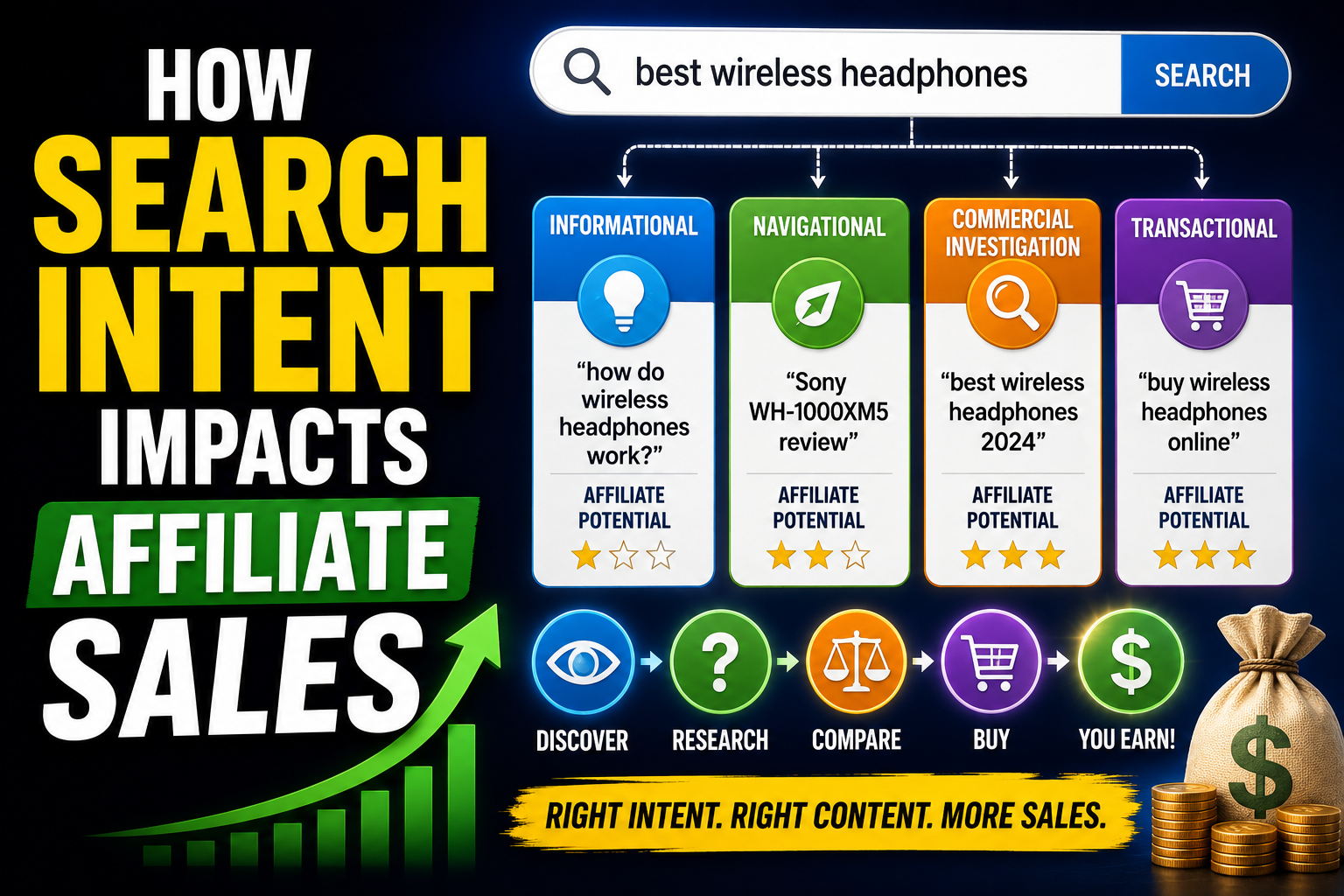
- There are several types of search intent that can be categorized into four primary types: informational, navigational, transactional, and commercial investigation.
- Informational intent describes users who seek to acquire knowledge about a particular topic or answer a question. These users typically do not have immediate purchasing intentions but are looking for quality information that can satisfy their curiosity. For affiliate marketers, providing informative content such as blog posts, how-tos, or guides can attract such users and establish credibility.
- Navigational intent occurs when users are looking for a specific website or page. They may type in the name of a brand or service directly into the search bar. It is important for affiliate marketers to ensure that their links and references are well-optimized for popular platforms, which can capture users looking for particular products or services.
- Transactional intent defines users who are ready to make a purchase. They typically include terms like "buy," "discount," or "deal" in their searches, showing clear intent to complete a transaction. For affiliate strategies, creating landing pages that showcase promotional offers or direct links to product purchases is essential.
- Finally, commercial investigation involves potential buyers who are researching and comparing different products before making a purchase decision. This intent is often characterized by inquiry-based searches containing phrases such as "best" or "reviews." For affiliate marketers, informative comparisons and product reviews can yield significant results by guiding users toward a buying decision.
The Connection Between Search Intent and User Behavior
- Understanding the connection between search intent and user behavior is crucial for optimizing affiliate marketing strategies. Search intent refers to the reason behind a user's query in a search engine. It can be broadly categorized into informational, navigational, commercial, and transactional intents. Each of these categories evokes distinct user behaviors that can significantly impact affiliate sales.
- Users who exhibit informational intent are typically in search of knowledge. They engage with content that educates or informs, such as articles, blogs, and tutorials. For affiliate marketers, this presents an opportunity to create content that aligns with users' queries, offering valuable insights while subtly integrating affiliate links to products or services that provide further solutions to readers’ needs.
- Conversely, users with commercial intent are often in the comparison phase. They seek to evaluate options, which makes them more likely to interact with content focused on product reviews, comparisons, and testimonials. By addressing their queries comprehensively, marketers can capture this audience’s attention and guide them toward making informed purchase decisions by incorporating affiliate recommendations.
- Finally, transactional intent denotes users who are ready to make a purchase. These users are typically looking for the best deals and are likely to click on affiliate links that lead to purchasing platforms. It is essential for affiliate marketers to understand that at this stage, users expect a seamless transition from content to a transaction, necessitating clear calls-to-action and optimized landing pages.
- The nuances of user behavior directly resulting from their search intent highlight the importance of crafting content tailored to meet specific needs. By aligning content strategy with search intent, affiliate marketers can foster a more effective connection with users, ultimately enhancing engagement and driving sales.
Why Understanding Search Intent is Key for Affiliate Marketers
- In the realm of affiliate marketing, comprehending search intent is paramount for achieving success. Search intent refers to the reason behind a user's query. This understanding empowers affiliate marketers to tailor their content strategies effectively. When marketers grasp what users are searching for—be it information, product comparisons, or specific purchases—they can create content that directly meets those needs.
- Aligning content with user intent not only enhances the user experience but also leads to higher conversion rates. For instance, if a user is searching for "best running shoes for flat feet," and an affiliate marketer provides a detailed comparison of suitable products along with reviews and purchase links, the content directly addresses the user’s needs. This increases the likelihood of conversion, as the information presented is relevant and valuable to the audience.
- Moreover, understanding search intent can significantly boost website traffic. When content is optimized for specific intents and keywords, it is more likely to rank higher in search engine results pages (SERPs). Higher visibility naturally attracts more organic traffic, creating opportunities for affiliate marketers to engage with potential customers. Content that resonates with users ensures that they spend more time on the site, reducing bounce rates and improving engagement metrics.
- Additionally, the strategic advantage gained through a nuanced understanding of search intent can lead to stronger affiliate partnerships. Brands are increasingly looking for affiliates who can drive targeted traffic and deliver meaningful conversions. By demonstrating the ability to understand and implement effective strategies based on search intent, marketers position themselves as valuable partners. This alignment cultivates trust and leads to better collaboration between affiliate marketers and brands.
Types of Search Intent and Their Implications for Affiliate Marketing
- Understanding the different types of search intent is crucial for affiliate marketers aiming to enhance their strategies and increase sales. Broadly categorizing search intent, we can identify four main types: informational, navigational, transactional, and commercial investigation. Each type carries significant implications for content creation and affiliate marketing tactics.
- Informational intent refers to users seeking knowledge or answers to their questions. In this category, marketers should focus on creating high-quality, informative content that educates users about a product or service. Examples include how-to guides, tutorials, and blog posts that address common queries. By providing valuable insights, affiliate marketers can build trust, positioning themselves as credible sources of information that effectively guide users in their purchasing decisions.
- Navigational intent signifies that users are explicitly searching for a specific brand or website. Here, the critical strategy is to ensure that affiliate links are prominently integrated into content that features recognizable brand names. This could include brand comparisons or reviews. By aligning content with user needs, marketers can capitalize on existing brand awareness and drive traffic through affiliate links.
- Transactional intent is explicitly geared towards users ready to make a purchase. With this type of intent, affiliate marketers should concentrate on optimizing sales-focused content such as product reviews, advertisements, and special offers. Clear calls to action and compelling explanations of product benefits will enhance conversion rates.
- Lastly, commercial investigation involves users comparing different products and seeking in-depth details before making a decision. For this type, marketers should provide comprehensive comparisons, user testimonials, and insightful product reviews that highlight unique selling points. Engaging content tailored to this intent can significantly influence potential buyers’ decisions.
- By understanding these search intent types, affiliate marketers can tailor content and promotional strategies to effectively meet user expectations and ultimately boost affiliate sales.
Effective Keyword Research for Search Intent
- Keyword research is a vital component of affiliate marketing, particularly when aligning content with the various layers of search intent. Understanding search intent—the reason behind a user's query—enables content creators to develop optimized content that resonates with their audience. This section delves into prominent tools and techniques to conduct keyword research tailored to search intent, achieving better engagement and conversion rates.
- First, one must categorize the four main types of search intent: informational, navigational, transactional, and commercial investigation. For instance, informational searches are typically made by users seeking knowledge, while transactional intent reflects a readiness to buy. Structuring your keyword research with this framework allows you to target queries that align specifically with user needs, leading to higher affiliate sales.
- Utilizing tools such as Google Keyword Planner, SEMrush, or Ahrefs can significantly streamline the process of identifying keywords reflecting different types of intent. Google Keyword Planner, in particular, is useful for discovering keywords with varying search volumes and intent types. Moreover, analyzing SERP features can also provide insights on the kind of content that ranks well for specific keywords.
- Another effective technique is leveraging long-tail keywords, which often reveal clearer user intent. For example, keywords like "how to choose a gym membership" indicate a user who is at the consideration stage; hence, providing comparative affiliate content at this stage could lead to conversions. Additionally, understanding the search intent behind high-volume and low-volume keywords allows one to strike a balance between attracting large audiences and meeting niche demands.
- Incorporating these strategies into your keyword research efforts fosters a more targeted approach to affiliate marketing. By aligning content with search intent through methodical keyword analysis, marketers can enhance user experience while potentially driving higher conversion rates.
Crafting Content that Aligns with Search Intent
- Creating content that aligns with user search intent is fundamental to driving effective affiliate sales. Understanding the boundaries of informational, navigational, and transactional intents enables content creators to tailor their strategies. By crafting content that resonates with these intents, publishers increase the likelihood of engaging their audience and converting leads into sales.
- To meet informational intent, consider producing comprehensive blog posts or articles that answer common questions within your niche. This type of content serves to educate users, guiding them through the decision-making process. Incorporate keyword phrases naturally within headings and throughout the body content to make it easier for search engines to recognize relevance. This approach also enhances user experience as it delivers valuable insights without overwhelming the reader.
- When addressing navigational intent, landing pages are crucial. These pages should facilitate easy navigation and access to specific products or services. Design them with a clean layout and clear calls-to-action that prompt users to explore further. Use relevant keywords that align closely with the products being promoted to capture traffic effectively. It's essential that these pages do not simply serve as links but provide additional information about the offerings, which bolsters user trust and engagement.
- Lastly, for transactional intent, product reviews play a pivotal role. Crafting detailed and honest reviews that highlight the product's features, benefits, and potential drawbacks will aid users in their purchase decisions. Including testimonials or user-generated content can enhance credibility and trustworthiness. Moreover, infusing persuasive language and strategic calls-to-action within these reviews can significantly impact conversion rates and drive sales through affiliate links.
Analyzing Traffic and Conversion Data to Optimize for Search Intent
- To effectively optimize for search intent in affiliate marketing, it is essential to analyze traffic and conversion data thoroughly. By doing so, marketers can understand which types of search intents are driving the most traffic and conversions, allowing for tailored strategies that align with user expectations. The first step in this process involves identifying key performance metrics that should be tracked. These typically include metrics such as click-through rates (CTR), conversion rates, bounce rates, and the average session duration.
- CTR provides insight into how appealing your content is to users searching for relevant keywords. A high CTR can indicate that your content matches well with the search intent of your audience. Conversely, analyzing conversion rates helps determine how effectively your traffic is being converted into sales or actionable leads. A low conversion rate may suggest a misalignment between the search intent and the offered products or services, necessitating adjustments to either the content or the affiliate suggestions displayed.
- Additionally, bounce rates can offer clues about user satisfaction; a high bounce rate typically signifies that visitors are not finding the information they were hoping for, which is a clear indicator of a disconnect with search intent. Average session duration can further help ascertain whether users are engaging with your site or browsing briefly before navigating away. By interpreting these metrics, marketers can identify which search intents are performing well and refine their affiliate strategies accordingly.
- Furthermore, employing analytical tools such as Google Analytics can facilitate the tracking of these metrics. Analyzing traffic sources, user demographics, and behavioral patterns can provide deeper insights into how well content aligns with the targeted search intents. Ultimately, measuring and interpreting data in this manner equips affiliate marketers with the knowledge to adapt and optimize their strategies, leading to more informed decisions that increase both traffic and sales.
Case Studies: Successful Affiliate Marketing Examples Based on Search Intent
- Understanding search intent is crucial for successful affiliate marketing campaigns. Businesses have leveraged this concept in various ways, leading to impressive results. Here, we examine several case studies that showcase the effectiveness of affiliate marketing strategies aligned with search intent.
- One prominent example is the campaign by an online fitness program that targeted keywords related to weight loss solutions. They identified that many users searched for "best weight loss programs" with the intent to find effective and proven methods. The affiliate marketers partnered with various fitness bloggers and influencers who shared their personal success stories and recommended the program. As a result, the campaign saw a 300% increase in conversions, demonstrating how aligning content with user search intent can enhance marketing outcomes.
- Another case study involves a technology review site that focused on consumer electronics. The site utilized a strategy centered on transactional search intent by targeting terms like "buy the latest smartphone". They crafted comprehensive comparison articles and review videos showcasing the newest devices while incorporating affiliate links. This approach not only informed readers but also influenced their purchasing decisions, leading to a significant rise in affiliate sales by over 150% in just a few months.
- In the travel industry, an online travel agency leveraged local search intent by creating location-specific content. By targeting keywords such as "best hotels in Paris" or "affordable flights to New York", the agency was able to attract users actively searching for travel arrangements. Collaborations with travel bloggers who provided expert insights and recommendations resulted in a 200% increase in affiliate bookings, highlighting how understanding search intent can directly impact affiliate performance.
- These case studies illustrate that a deep understanding of search intent not only shapes content strategies but also significantly boosts affiliate marketing success. By aligning their offerings with the needs and motivations of searchers, businesses can create compelling affiliate campaigns that ultimately drive higher sales and revenue.
Future Trends in Search Intent and Affiliate Marketing
- As the landscape of digital marketing continues to evolve, understanding search intent will remain a paramount factor for success in affiliate marketing. With advancements in technology and shifts in user behavior, marketers must adeptly navigate these changes to ensure alignment with consumer needs and preferences.
- One significant trend is the increased adoption of artificial intelligence (AI) in search algorithms. AI enhances the capability to interpret query context and user behavior, which in turn refines the relevance of search results. As AI technologies advance, the capacity to understand and predict user intent will become more sophisticated. Marketers should leverage AI-driven tools to analyze search data, identify emerging keywords, and create content that resonates with search intent, ultimately boosting their affiliate sales.
- Another trend is the rise of voice search and the growing use of virtual assistants. As more individuals utilize voice-activated devices, the nature of search queries is changing. Consumers tend to phrase their searches in a more conversational manner when using voice, resulting in longer-tail keywords that define specific search intents. Affiliate marketers must adapt their content strategies to reflect these changes, ensuring they target relevant long-tail keywords and optimize their website for voice search implications.
- Additionally, user behavior regarding mobile usage is continually shifting, with an increasing number of transactions taking place on mobile devices. This change necessitates a mobile-first approach in affiliate marketing, where websites and promotional content are optimized for mobile users. Understanding search intent within the context of mobile behavior can enable marketers to create precise and compelling affiliate offers that drive conversions.
- In conclusion, staying ahead of trends in search intent is vital for affiliate marketers seeking sustained success. By embracing technological advancements, adapting to evolving search behaviors, and focusing on mobile optimization, marketers can effectively navigate the future landscape of affiliate sales.
Login or create account to leave comments

Comments (0)