
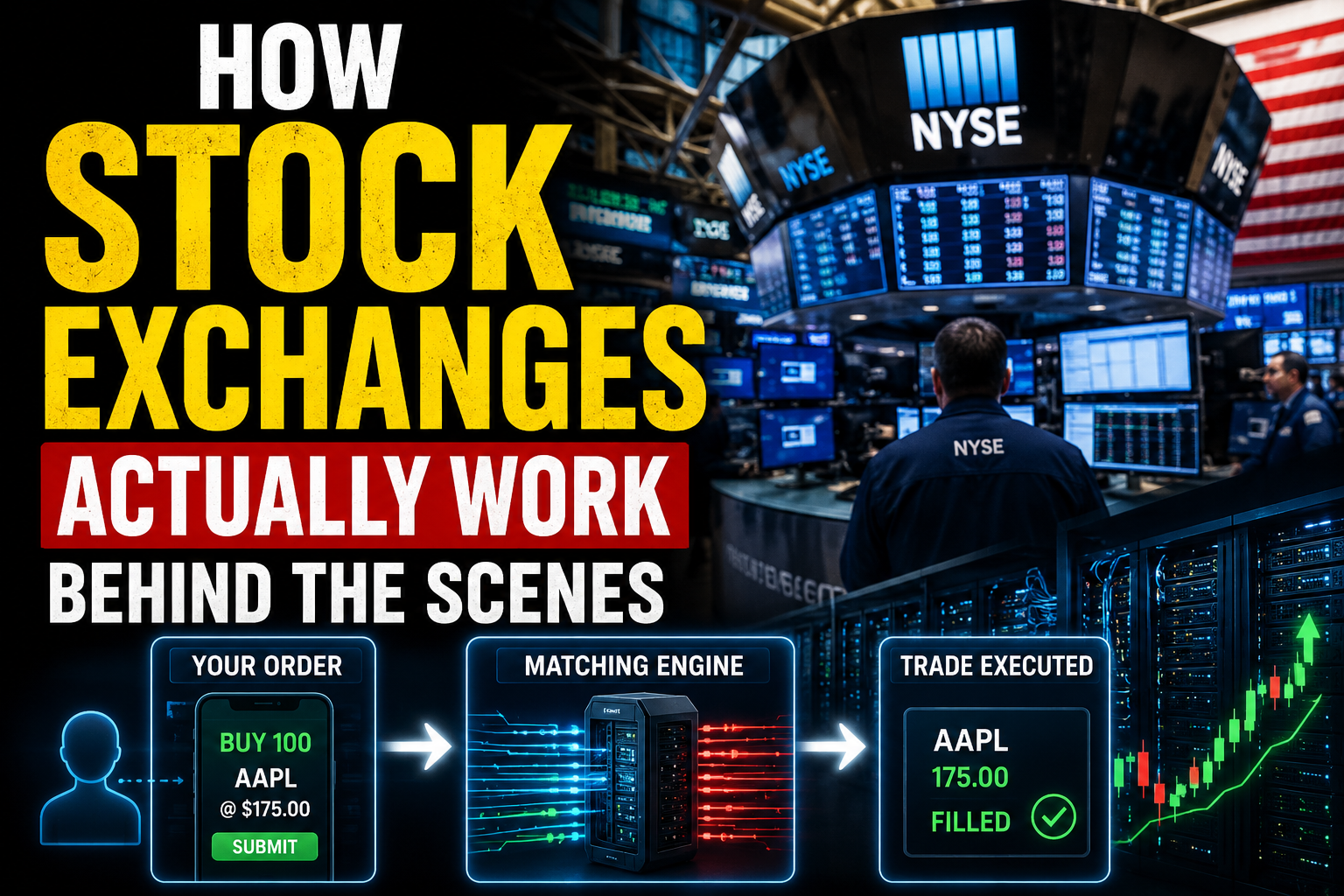
Introduction to Stock Exchanges
- Stock exchanges serve as vital nodes within the global financial ecosystem, functioning as marketplaces where securities, such as stocks and bonds, are bought and sold. They facilitate these transactions by providing a structured environment that promotes transparency and efficiency, enabling investors to engage in trading activities with confidence.
- The primary purpose of stock exchanges is to provide a platform for companies to raise capital. When firms wish to expand or finance new projects, they can issue shares to the public through an initial public offering (IPO). This process not only raises necessary funds for the companies but also grants investors an opportunity to become partial owners, thereby participating in the company's potential growth and profitability.
- Moreover, stock exchanges contribute to price discovery, which is the process of determining the price of a security through the interactions of buyers and sellers in the market. This ongoing process ensures that stock prices reflect the current value of the underlying assets, based on their anticipated future performance. Investors can assess the market conditions and make informed decisions regarding their investment strategies, which enhances market liquidity.
- In addition to capital formation for companies, stock exchanges play a crucial role in providing investment opportunities for individual investors. They empower individuals to access a wide array of financial instruments, encouraging them to diversify their investment portfolios. By offering a platform to trade various types of securities, stock exchanges make it easier for investors to receive dividends and capital gains, which are essential for wealth accumulation.
- In summary, stock exchanges are essential to the financial landscape, acting as intermediaries that connect sellers and buyers, facilitate capital access, and foster economic growth through investment opportunities.
The Structure of Stock Exchanges
- Stock exchanges operate through a complex organizational framework designed to facilitate the trading of securities. Generally, there are two primary types of exchanges: national and regional. National stock exchanges, such as the New York Stock Exchange (NYSE) and the NASDAQ, serve as key hubs for trading activities, providing a platform for larger companies to raise capital and for investors to trade shares. In contrast, regional exchanges cater to local businesses and investors, offering smaller firms an opportunity to list their securities and participate in the capital markets.
- In addition to stock exchanges themselves, various regulatory bodies are involved in overseeing these platforms. For example, in the United States, the Securities and Exchange Commission (SEC) regulates market activities to ensure fair trading practices and protect investors. Such regulatory oversight is critical in maintaining investor confidence and ensuring that exchanges operate transparently and efficiently. The roles of these bodies include enforcing compliance with relevant laws, monitoring market activities, and providing guidance to both investors and companies.
- Connecting buyers and sellers is a fundamental function of stock exchanges, accomplished through standardized processes and mechanisms. This connection is achieved via an order book, where buy and sell orders are listed and matched according to price and timing. Physical trading environments like the trading floor of the NYSE exist alongside electronic trading platforms that have become increasingly predominant. Electronic exchanges offer efficiency and speed, allowing for high-frequency trading and expanded access for a global investor base. This blend of physical and electronic trading not only democratizes access to markets but also enhances liquidity, making it easier for participants to execute trades seamlessly.
Order Types and Execution Processes
- In the world of stock trading, understanding the various order types is essential for investors to execute trades effectively. Among the most common order types are market orders, limit orders, and stop-loss orders. Each has distinct characteristics that cater to different trading strategies and market conditions. A market order is the simplest form, where a trader buys or sells a stock at the current market price, ensuring immediate execution. This type of order is often used when traders prioritize swift entry or exit over price precision.
- Limit orders, on the other hand, allow traders to specify the maximum price at which they are willing to buy or the minimum price at which they are prepared to sell. This order type serves as a protective mechanism that enforces price discipline; however, it may not guarantee execution, especially in volatile markets where prices fluctuate rapidly. Conversely, stop-loss orders are designed to limit losses on positions by automatically selling a stock when it reaches a predetermined price. This strategy provides a safety net, enabling traders to curtail potential losses in fast-moving markets.
- The execution of these orders relies heavily on the underlying processes that take place within stock exchanges. When traders submit orders, they enter an order book, which is a real-time listing of buy and sell orders for a specific stock. Here, a matching engine plays a crucial role, automatically pairing buy and sell orders based on price and time priority. This sophisticated technology ensures that trades are executed efficiently, often within milliseconds. The fluidity of the order book combined with the capabilities of the matching engine is pivotal in maintaining market liquidity and allowing investors to navigate the complexities of the stock market effectively.
Liquidity and Market Makers
- Liquidity is a vital concept in stock markets, representing the ease with which assets can be bought or sold without causing significant price fluctuations. A highly liquid market allows traders and investors to enter and exit positions swiftly, while a lack of liquidity can lead to price volatility and impede trading activities. In essence, liquidity ensures that there are sufficient buyers and sellers available at any given time, which is crucial for maintaining market stability.
- Market makers play an essential role in providing liquidity to stocks and other securities. They are financial institutions or individuals that commit to buying and selling specific securities at specified prices, effectively bridging the gap between buyers and sellers. By continuously quoting buy (bid) and sell (ask) prices, market makers facilitate trades, ensuring that transactions can be executed smoothly and efficiently. Their presence helps to reduce the bid-ask spread, which is the difference between the buying and selling price of a security.
- The operational mechanisms of market makers involve holding inventories of stocks, which they use to meet the buying and selling demands of traders in real-time. During high turnover periods, such as earnings announcements or economic news releases, market makers absorb sudden influxes of trading activity, allowing for transactions to occur even when volume spikes. Their role in providing liquidity becomes particularly significant in less-traded stocks, where the buyer or seller may not easily find a counterpart.
- A robust liquidity environment fosters investor confidence and promotes broader participation in markets. Without adequate liquidity, traders may experience delayed transactions, leading to potential losses or missed opportunities. Market makers, therefore, are indispensable in ensuring that stock markets function smoothly, facilitating continuous trading and contributing to overall market health and stability.
The Role of Brokers and Trading Platforms
- In the dynamic world of stock exchanges, brokers and trading platforms serve as critical intermediaries, facilitating the buying and selling of securities for individual investors and institutional clients alike. Brokers act on behalf of their clients, executing trades in various capacity levels, and the choice of broker has significant implications for trading efficiency and costs.
- There are primarily two types of brokers: full-service brokers and discount brokers. Full-service brokers provide comprehensive services, including personalized investment advice, financial planning, and research reports. They typically charge higher fees due to their extensive offerings, appealing to investors who prefer a hands-on approach and require expert guidance. On the other hand, discount brokers focus primarily on executing trades with minimal added services, catering to self-directed investors who are comfortable making their own decisions and wish to minimize costs.
- Trading platforms have revolutionized the trading experience, enabling a user-friendly interface where trading can be conducted with just a few clicks. Modern platforms offer advanced features such as real-time market data, custom charting tools, and even algorithmic trading capabilities. These technological advancements allow traders to access markets globally, increasing both the pace and volume of trade executions. The impact of technology is further underscored by the rise of mobile trading applications, which afford users the flexibility to manage their portfolios and make investments on the go.
- As trading practices continue to evolve, the integration of sophisticated algorithms and machine learning within trading platforms is notable. These innovations are enhancing the accuracy and speed of trade executions while providing traders with the necessary tools to analyze market trends and make informed decisions. In conclusion, brokers and trading platforms play indispensable roles within the stock exchange ecosystem, shaping the experience of traders and investors significantly.
Regulatory Framework and Compliance
- The operation of stock exchanges is fundamentally shaped by a rigorous regulatory framework that is designed to ensure fairness, transparency, and integrity in the financial markets. In the United States, the primary regulatory authority overseeing stock exchanges is the Securities and Exchange Commission (SEC). Established in 1934, the SEC’s mission encompasses protecting investors, maintaining orderly markets, and facilitating capital formation. The presence of such oversight agencies is critical for fostering trust among market participants, including investors and corporations.
- Stock exchanges must adhere to a myriad of rules and regulations that govern trading practices. These regulations cover various aspects of trading, including important facets such as market manipulation, insider trading, and disclosure requirements. For instance, publicly traded companies are mandated to provide regular disclosures to the SEC, outlining their financial health, operational results, and other material information that could influence investment decisions. This transparency is essential in helping investors make informed choices based on accurate and timely information.
- Moreover, compliance with these regulations is crucial for maintaining market integrity. Failure to comply with SEC regulations can result in severe penalties, including financial fines or trading suspensions. Consequently, firms that operate on stock exchanges are rigorously monitored to ensure adherence to trading rules, which helps mitigate risks associated with fraudulent activities. Stock exchanges themselves often establish their own additional rules and standards to enhance compliance measures further, reinforcing the importance of ethical practices in trading.
- In summary, the regulatory framework, epitomized by the SEC and supported by extensive compliance measures, plays a pivotal role in the operation of stock exchanges. By enforcing stringent rules and ensuring transparency, the regulatory environment seeks to safeguard the interests of all market participants and uphold the overall integrity of the financial system.
Clearing and Settlement Processes
- The clearing and settlement processes are critical components of stock exchanges, ensuring that transactions are executed smoothly and efficiently after a trade is finalized. Once a trade is executed, the clearing process begins, where both parties – the buyer and seller – confirm the terms of the transaction, such as the price and quantity of shares exchanged. This step is essential to minimize discrepancies and serves as a means of validating that both parties agree to the trade.
- At the heart of the clearing process is the clearinghouse, an intermediary institution that plays a vital role in mitigating counterparty risk. The clearinghouse guarantees the performance of the trade, acting as a middleman between buyers and sellers. By assuming the responsibility of trade execution, the clearinghouse reduces the risk that either party will default on their obligations. This function is particularly important in the fast-paced world of stock exchanges, where delays and errors could have significant financial implications.
- The timeline for the transfer of ownership typically follows a well-defined schedule. Most trades settle within two business days following the trade date, commonly referred to as T+2. During this period, the clearinghouse ensures that all necessary documentation is completed and verifies the financial transactions involved. After this verification, the actual transfer of ownership occurs, ensuring that the buyer receives their shares while the seller receives the corresponding funds.
- The importance of the clearing and settlement processes cannot be overstated. They create a secure trading environment that fosters investor confidence and maintains market integrity. Without these processes, the risk of trade disputes and potential defaults would escalate, leading to a less stable investment landscape. Thus, understanding these functions offers valuable insights into the behind-the-scenes operations of stock exchanges.
Market Trends and Economic Indicators
- The stock market does not operate in isolation; it is deeply intertwined with broader economic conditions and market trends. Various macroeconomic factors intricately influence stock exchanges, impacting investor sentiment, market dynamics, and overall performance. Understanding these relationships is crucial for anyone looking to navigate the stock market effectively.
- One of the primary economic indicators influencing stock market performance is the Gross Domestic Product (GDP). GDP reflects the overall economic health of a country, measuring the total value of goods and services produced. A rising GDP is typically associated with increased corporate profitability, which can lead to higher stock prices. Conversely, a declining GDP may signal economic downturns, triggering bearish sentiment among investors and lowering stock valuations.
- Interest rates also play a pivotal role in shaping market trends. Central banks manipulate interest rates to regulate economic activity. Lower interest rates make borrowing cheaper, encouraging businesses and consumers to spend, which can stimulate economic growth. In such conditions, stock prices may rise as investor confidence increases. However, higher interest rates can have the opposite effect, increasing borrowing costs and potentially leading to reduced consumer spending, impacting corporate earnings and, in turn, stock prices.
- Unemployment rates are another critical economic indicator that can affect stock exchanges. High unemployment often correlates with reduced consumer spending as individuals face financial challenges, which can harm corporate performance and stock prices. On the other hand, low unemployment rates usually signify a robust economy, fostering consumer confidence and subsequently buoying stock market performance.
- Overall, the relationship between stock exchanges and these economic indicators is complex and multifaceted. Investors must consider these factors to make informed decisions, as they significantly impact investor behavior and market trends.
Future Trends in Stock Exchanges
- The evolving landscape of stock exchanges is significantly influenced by emerging technologies and innovative practices that have the potential to reshape how trading is conducted. One notable trend is the rise of cryptocurrency exchanges, which have gained immense popularity in recent years. Unlike traditional stock exchanges, these platforms facilitate the trading of digital assets, enabling users to buy, sell, and exchange cryptocurrencies. The increasing acceptance of these digital currencies by investors and the growing number of markets catering to them signal a shift towards a more diversified trading environment.
- Another key factor in the future of stock exchanges is the impact of artificial intelligence (AI) on trading strategies. With the advent of sophisticated algorithms, traders are now capable of analyzing vast amounts of data to identify patterns and make informed decisions. AI-driven trading systems can execute transactions at unprecedented speeds, providing a competitive edge for those who adopt these technologies. As machine learning techniques become more refined, their integration into trading operations is expected to enhance efficiency and accuracy, further solidifying their role in the financial sector.
- The concepts of decentralized finance (DeFi) are also poised to challenge traditional stock exchanges. DeFi leverages blockchain technology to create an open and permissionless financial ecosystem, where participants can engage in lending, borrowing, and trading without relying on central authorities. This shift towards decentralized platforms could democratize access to financial instruments and promote transparency, leading to potential changes in market practices and regulations.
- As technology drives these transformations, regulatory frameworks will likely evolve to address the challenges and opportunities presented by these innovations. Authorities will need to ensure market integrity while fostering an environment conducive to innovation. Hence, navigating these future trends will require a careful balance between growth and regulation to sustain the reliability of stock exchanges in a digital age.
Login or create account to leave comments

Comments (0)