
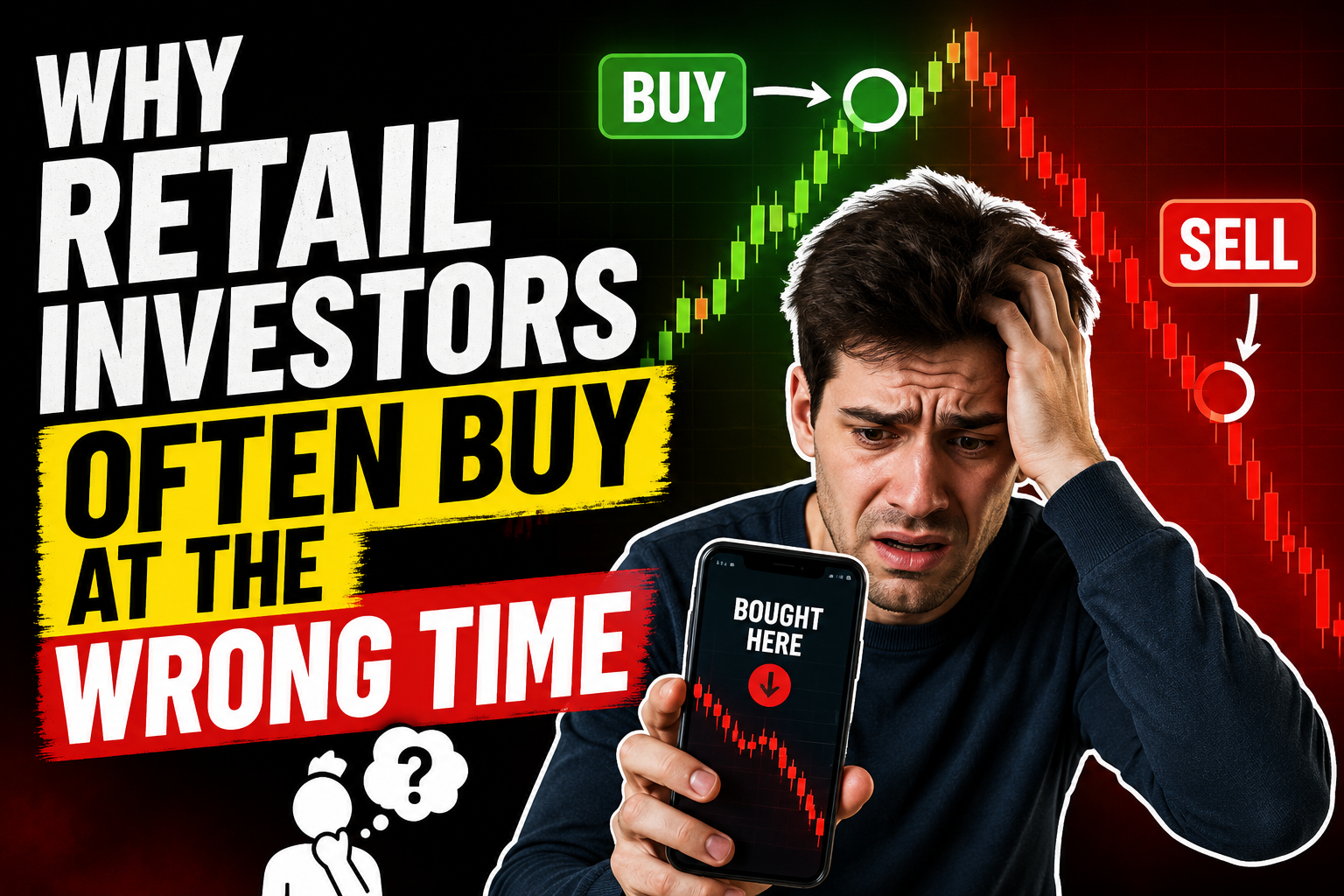
Understanding Retail Investors
- Retail investors refer to individuals who buy and sell securities for their personal accounts, rather than on behalf of an institution. These investors play a significant role in the stock market, contributing to its overall dynamics. Unlike institutional investors, such as mutual funds and pension funds, retail investors often have smaller amounts of capital available for investment. This difference in scale leads to distinct behaviors and strategies in the marketplace.
- One of the defining characteristics of retail investors is their motivation for investing. Many retail investors are attracted to the stock market as a means to build wealth, save for retirement, or achieve specific financial goals. This pursuit can result in a more emotional approach to investing, as personal financial aspirations may lead to impulsive decisions, especially during periods of market volatility.
- Additionally, retail investors often exhibit varying levels of risk tolerance, which influences their investment selection. While some may be comfortable taking on high-risk investments for the potential of significant returns, others may prefer conservative investment strategies with lower expected returns. Typically, retail investors are more susceptible to herd behavior, making decisions based on trends and media narratives rather than thorough fundamental analysis.
- Common investment strategies among retail investors can include buy-and-hold tactics, seeking out high-growth stocks, and engaging in frequent trading based on market sentiments. However, these strategies can lead to adverse outcomes when the decisions are made reactively rather than based on sound research. Ultimately, understanding the psyche of retail investors is crucial as it helps explain why they frequently purchase assets at inflated prices, often leading to suboptimal investment performance.
The Psychology of Investing
- The realm of investing is significantly shaped by psychological undertones that dictate the behavior of retail investors. One of the predominant emotions influencing investment decisions is fear. Fear can stem from market volatility, negative news, or economic downturns, often causing investors to hastily sell off assets in an attempt to minimize losses. This reaction not only undermines their investment strategies but can also lead to significant financial setbacks due to poorly timed decisions.
- Conversely, greed plays a critical role in the decision-making process of retail investors. When the market is buoyant, and stock prices are soaring, the excitement can be intoxicating. Retail investors may become overly optimistic, leading them to buy stocks impulsively without a thorough analysis. This often results in purchasing at inflated prices—an ideal scenario for a market correction, where those investors find themselves holding depreciated stocks.
- Additionally, the herd mentality can greatly exacerbate these issues. Retail investors often look to their peers or the broader market trends before making decisions. This reliance on collective behavior can lead to a stampede effect, where individuals buy or sell based on what they observe others doing, rather than conducting independent research or adhering to their investment strategy. This approach can culminate in buying during peaks and selling during troughs, which is the opposite of what a judicious investment strategy would suggest.
- Another critical psychological factor is loss aversion, wherein investors feel the pain of losing money more acutely than the pleasure of gaining. This fear of loss can drive irrational behavior, encouraging investors to hold onto underperforming stocks in the hope that they will recover, which may result in them missing better investment opportunities elsewhere. These psychological influences create a complex web that often leads retail investors to make suboptimal decisions regarding market timing.
Market Trends and Timing
- Market trends play a crucial role in the decisions made by retail investors. Understanding these trends is essential, particularly during times of market volatility when emotions can significantly influence buying behaviors. Broadly, markets can be classified as either bull or bear. A bull market indicates a period where prices are rising or are expected to rise, fostering investor confidence and enthusiasm. Conversely, a bear market is characterized by declining prices, leading to pessimism and hesitancy among investors.
- One of the primary challenges retail investors face is the difficulty in distinguishing between temporary market downturns and long-term bearish trends. During periods of economic uncertainty, investors often react impulsively, influenced by fear and misinformation. This can cause them to buy at higher prices when they feel the market is rebounding from a downturn or to sell at a loss during panic-induced sell-offs. Such actions typically arise from an inadequate understanding of the market cycle, which includes phases that can mislead retail investors into misjudging the market's trajectory.
- Retail investors often grapple with the emotional aspects of investing, making it difficult for them to adhere to logic and research-based strategies. As they attempt to time their purchases based on current market sentiments, they might overlook key indicators that signal ongoing trends. Short-term fluctuations can easily obscure the overarching market direction, resulting in poorly timed investments. Furthermore, the vast amount of available information can overwhelm and confuse investors. Therefore, retail investors might default to reactions based more on popular opinion rather than substantial data analysis.
- To mitigate these challenges, it is vital for retail investors to embrace a more structured approach. Developing a comprehensive understanding of market trends and how they influence investment timing is critical. By focusing on long-term objectives and recognizing the signs of both bull and bear markets, investors can make more informed decisions and potentially avoid the pitfalls of mistimed purchases.
FOMO: The Fear of Missing Out
- The phenomenon known as FOMO, or the fear of missing out, significantly impacts retail investors' decision-making processes. This psychological trigger compels individuals to invest in stocks or other securities based on the perceived urgency of seizing an opportunity rather than on diligent research or analysis. When a stock or investment opportunity gains attention in the financial news or social media, it can create a rush among investors who fear being left behind as prices escalate.
- FOMO can lead retail investors to overlook essential factors such as a stock's intrinsic value, market conditions, and long-term growth potential. Instead, many individuals prioritize short-term price movements and trends, leading to impulsive buying at inflated prices. The urgency created by a booming market or rising stock prices often clouds judgment, making it tempting to enter at a peak rather than waiting for a more favorable entry point. Consequently, investors may find themselves purchasing assets at a time that is unlikely to yield optimal returns.
- This behavior is further aggravated by social influences, with many investors observing the successes of peers or influencers who have benefitted from timely investments. This can exacerbate the intensity of the fear of missing out, pushing less-experienced investors to act quickly, often with little thought to their financial strategies or risk tolerance. As a result, the market can become artificially inflated, creating bubbles that may burst when the hype subsides, ultimately affecting those who gave in to FOMO.
- By recognizing the impact of FOMO on investment decisions, retail investors can strive to develop a more disciplined approach, focusing on thorough research and analysis rather than succumbing to emotional impulses. A clear investment strategy can help mitigate the effects of FOMO, allowing individuals to make more informed decisions that better align with their financial goals.
Influence of Media and Social Networks
- In today's fast-paced financial landscape, the influence of media and social networks on retail investors cannot be understated. Retail investors often turn to financial news outlets, social media platforms, and online forums to inform their investment decisions. However, these sources may not always provide the most reliable or objective information, which can lead to poorly timed stock purchases.
- Financial news, particularly in its more sensationalist forms, tends to prioritize attention-grabbing headlines over substance. This can create an environment where retail investors react impulsively to news, chasing trends rather than conducting thorough research. For instance, when a popular stock experiences a sudden surge in price, media coverage often glamorizes the phenomenon, luring investors into buying at inflated prices without consideration of underlying fundamentals.
- Moreover, social media platforms are rife with speculative discussions and hype that can distort an individual's perception of a stock's true value. Retail investors may find themselves swayed by posts or tweets from influential figures or an abundance of user-generated content that presents an optimistic outlook. Such information, while engaging, can often lack a rigorous analysis, leading to hasty decisions based on collective enthusiasm rather than sound investment strategies.
- Online forums also serve as a double-edged sword. While they provide a space for sharing insights and experiences, they can foster echo chambers where confirmation bias flourishes. Investors may amplify each other's beliefs about a stock's potential, creating unrealistic expectations that contribute to poor timing in their investment decisions. The psychological aspects of crowd behavior, driven by a desire to conform or gain quick profits, can further complicate the decision-making process.
- In sum, the pervasive influence of financial news and social networks plays a significant role in retail investors' timing and purchasing decisions. Increasing awareness of these dynamics may help investors approach such sources with a more critical eye, ultimately leading to better-informed choices.
Lack of Research and Due Diligence
- One of the primary reasons retail investors often find themselves buying at the wrong time is the lack of adequate research and due diligence. Unlike institutional investors, who typically have access to extensive resources and analytical tools, retail investors may rely on anecdotal information, social media trends, or popular sentiment. Such shallow approaches often lead to impulsive decisions based on market hype rather than a solid understanding of a company or sector.
- Understanding the fundamental and technical aspects of the companies in which they invest is crucial for retail investors looking to avoid poor timing. Fundamental analysis includes examining financial statements, understanding business models, and evaluating market conditions. Conversely, technical analysis involves analyzing stock price movements and market trends. Insufficient attention to these critical areas can result in ill-timed purchases that do not align with the investor’s financial goals.
- Additionally, many retail investors may not have a clear investment strategy, leading to hasty decisions. Without a concrete plan that incorporates thorough research, they might be swayed by short-term market volatility, causing them to buy shares at inflated prices. This reactive behavior underscores the importance of conducting proper due diligence before entering into any investment.
- Moreover, a lack of awareness regarding macroeconomic factors and the broader market environment can exacerbate this issue. Failing to consider how economic indicators and global events influence stock prices may lead investors to make ill-informed choices. Therefore, emphasizing meticulous research and a comprehensive understanding of both the company and market dynamics can significantly enhance a retail investor's timing and overall investment outcomes.
Ignoring Technical Analysis
- Many retail investors face challenges that lead to suboptimal investment decisions, particularly when it comes to timing their market entries. A pervasive issue among these investors is the tendency to overlook the critical discipline of technical analysis. Technical analysis involves the evaluation of price movements, volume dynamics, and trends through charts and various indicators, aiming to forecast future price action based on historical patterns.
- Investors who neglect technical analysis often miss valuable insights that could inform their buying strategies. For instance, certain indicators such as moving averages, relative strength index (RSI), and support and resistance levels can provide substantial information regarding the ideal entry points for a given asset. Retail investors frequently make decisions based on emotional impulses or headlines, without considering those technical signals that indicate when buying may be most advantageous.
- The reliance solely on fundamental analysis can further detract from their investment effectiveness. While fundamental analysis focuses on the intrinsic value of a company by examining factors like earnings, revenues, and overall market conditions, it does not account for the short-term price fluctuations that can significantly impact a retail investor's returns. Thus, integrating technical analysis with fundamental analysis typically creates a more balanced approach, allowing investors to harness the strengths of each discipline.
- Moreover, chart patterns such as triangles, flags, and head-and-shoulders formations can signal potential reversals or continuations in market trends. Ignoring these patterns may lead to inadequate timing of buy orders, resulting in purchases that occur during overbought conditions or before a price decline. Overall, understanding and applying technical analysis can greatly enhance a retail investor's ability to make informed, data-driven decisions that align closely with market movements.
Emotional Investing vs. Strategic Planning
- In the realm of investing, the dichotomy between emotional investing and strategic planning is crucial for retail investors to understand. Emotional investing often leads individuals to make impulsive decisions based on feelings rather than informed analysis. For instance, during market fluctuations, fear and greed can drive retail investors to panic sell or, conversely, buy into hype, leading to unfavorable outcomes. This emotional reaction often stems from a lack of confidence in their decisions and a desire for immediate gratification, which can result in purchasing at inflated prices or selling at a loss when market conditions shift negatively.
- On the other hand, strategic planning is anchored in a well-thought-out investment strategy that prioritizes long-term goals over short-term emotions. Investors who adopt a strategic approach typically establish a comprehensive plan that includes defined financial objectives, risk tolerance, and asset allocation. This strategy not only includes appropriate entry and exit points but also involves systematic reviews and adjustments informed by market trends and economic indicators. By cultivating a disciplined approach, retail investors can better manage their portfolios and minimize the risk of emotional decision-making.
- To effectively implement a strategic investment plan, retail investors should focus on education and self-awareness. Understanding personal biases and market psychology can help mitigate emotional responses. Investors can benefit from setting predefined criteria for making investment decisions, thereby reducing the likelihood of reacting emotionally to market movements. Engaging with financial advisors or utilizing analytical tools can also aid in fostering a more rational approach to investing.
- In conclusion, the key distinction between emotional investing and strategic planning lies in the approach adopted by the investor. By steering away from impulsive decisions and instead embracing a solid investment strategy, retail investors can enhance their chances of achieving financial objectives and navigating the complexities of the market with greater confidence.
Best Practices for Timing Purchases
- To enhance their chances of making profitable investments, retail investors must refine their approach to timing their stock purchases. A key aspect of this refinement entails developing a disciplined investment strategy that is tailored to individual financial goals and market conditions. By establishing specific investment objectives—such as long-term growth or short-term gains—investors can align their buying decisions appropriately, minimizing the likelihood of impulsive reactions to market fluctuations.
- Setting specific buying thresholds is another effective practice. By determining the precise prices at which they are willing to buy, investors can avoid the emotional trap of chasing stocks during market surges or panic-selling during downturns. This method relies on a clear understanding of one’s risk tolerance and market analysis, allowing investors to make informed choices instead of succumbing to market hype or fear. Additionally, utilizing limit orders can automate this process, ensuring stocks are purchased only when they reach the desired price points.
- Utilizing analytical tools and resources for market analysis can significantly enhance an investor's timing decision. Platforms that provide real-time data, market trends, and analytical reports can empower retail investors with insights that lead to more informed purchasing actions. Engaging with financial news, stock analysis, and investor communities can round out an investor's knowledge, equipping them to better understand when to enter or exit the market.
- Ultimately, employing a combination of disciplined strategy, clear buying thresholds, and analytical tools can significantly improve the timing of stock purchases for retail investors. By honing their skills and knowledge, investors can position themselves to capitalize on market opportunities rather than fall prey to the common pitfalls of timing the market incorrectly.
Login or create account to leave comments

Comments (0)